
THE STERLING APPROACH
Start with the cause, then build the route to resolution.
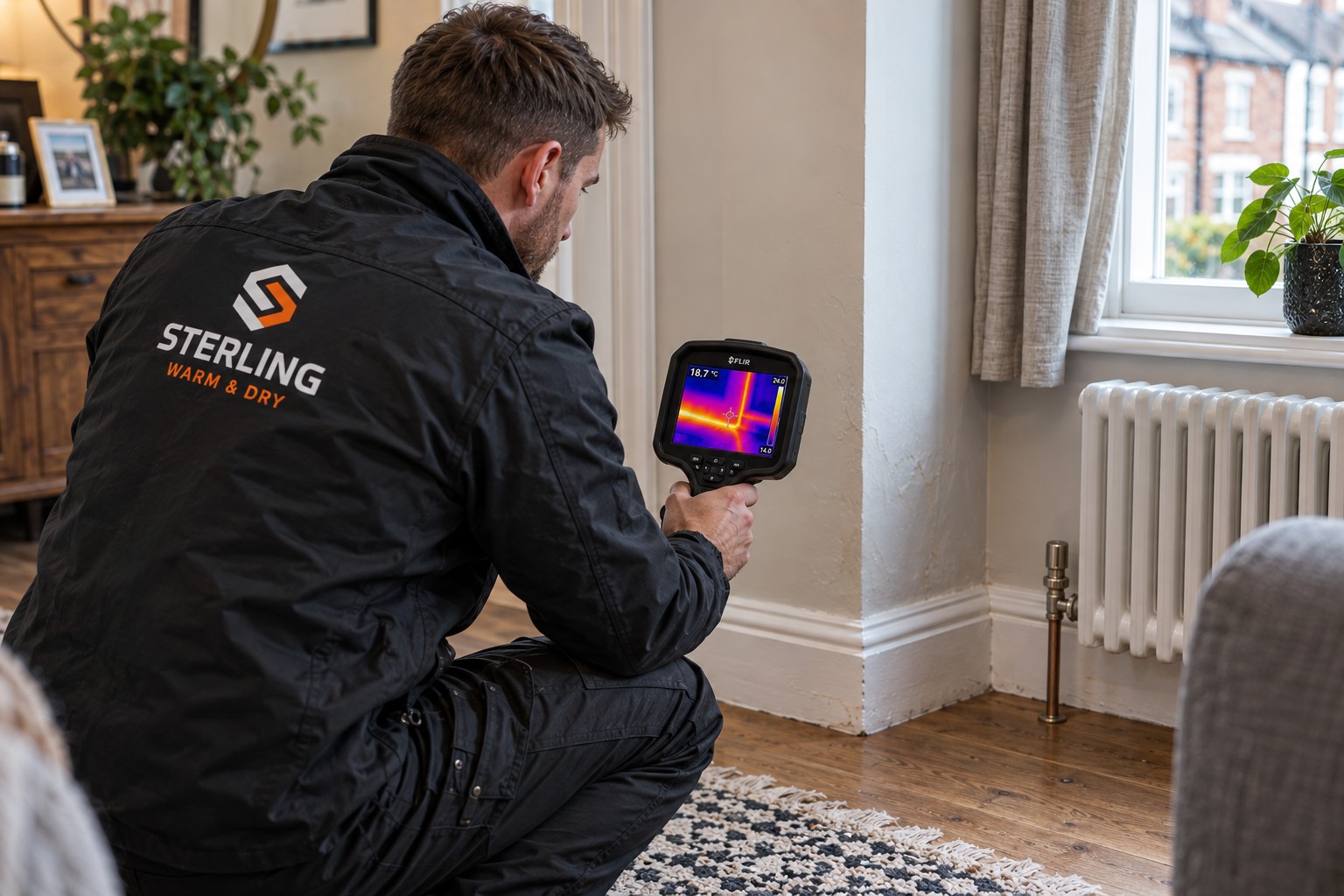
Stopping the leak does not necessarily end the incident. Water can remain within plaster, timber, screeds, insulation and floor build ups after surfaces look dry. Sterling connects source control to moisture assessment, drying strategy and reinstatement so the building is treated as one recovery project.
The first priority is control
Active water should be made safe and the source controlled as quickly as practicable. The affected area can then be assessed to understand where water has travelled and which materials can remain, which need opening up and which may need removal.
Drying is a measured process
Drying is not simply leaving equipment in a room. The approach depends on the materials, water pathway, environmental conditions and access to wet fabric. Baseline readings and monitoring provide evidence of progress and help determine when reinstatement is appropriate.
Restore after the moisture problem is understood
Prematurely closing wet assemblies can trap moisture and create secondary problems. Reinstatement should follow the drying and condition evidence, with targeted repair and making good coordinated around the original incident.
HOW THE JOB MOVES
A repeatable route from symptom to action.
Control the source and immediate risk
The evidence from this stage informs the next decision.
Assess and document affected areas
The evidence from this stage informs the next decision.
Dry and monitor building materials
The evidence from this stage informs the next decision.
Repair, reinstate and close the job
The evidence from this stage informs the next decision.
DOCUMENT THE DECISION
Make the evidence useful after the visit.
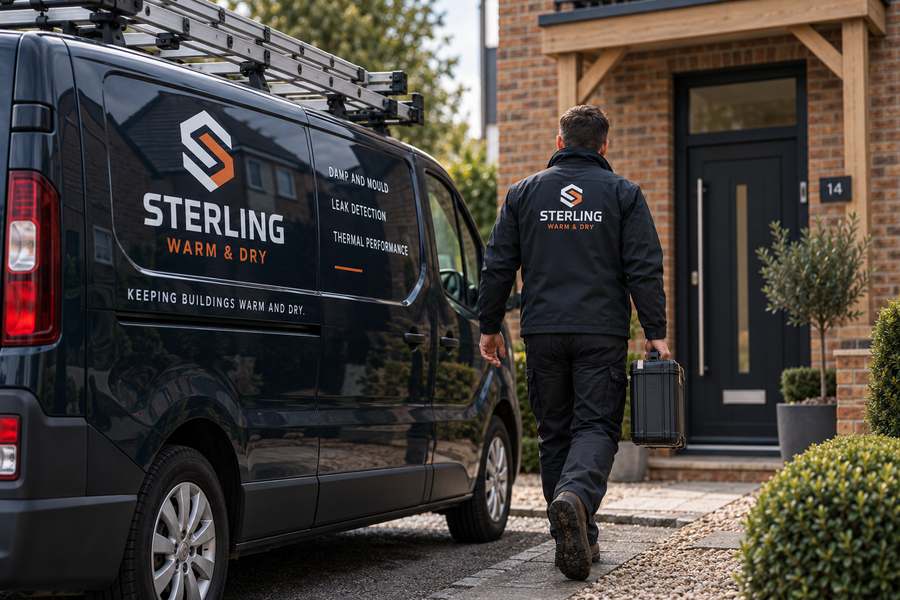
For involved or managed property instructions, the site record can connect photographs, observations and relevant measurements to a clear recommendation and next stage.
Professional reportingLOCAL COVERAGE
Water damage restoration across Leeds and Yorkshire.
The building stock and the risks that go with it change from town to town. Each area page below sets out what we most commonly find locally.
Leeds
Terraces, mill conversions and city centre flats close to the Aire.
EXPLORE →York
Historic core, listed buildings and riverside properties.
EXPLORE →Harrogate
Period terraces, guest houses and commercial premises.
EXPLORE →Wakefield
Ex-mining terraces and converted industrial buildings.
EXPLORE →West Yorkshire
Portfolio cover across Bradford, Huddersfield, Halifax and Dewsbury.
EXPLORE →COMMON QUESTIONS
Questions about this service
How quickly should water damage be dealt with?
Active water and immediate risks should be addressed promptly. The appropriate drying and repair programme depends on the extent of wetting and the materials affected.
Does a room being warm mean the structure is dry?
No. Room air and surface appearance do not confirm that concealed or dense building materials have reached an appropriate moisture condition.
Can Sterling handle the repair afterwards?
The Sterling model is designed to connect investigation, drying and building repair so that reinstatement can follow the evidence rather than becoming a disconnected job.
“We had a tenant reporting damp and the landlord understandably wanted to know what was actually causing it before approving anything. The report made that clear and gave us something we could send straight over to him.”
Aisha · Letting agent, LeedsStart with the building problem.
Tell Sterling what you can see, when it started and whether water is active now. We can establish the most appropriate investigation or response pathway.
Book / report an issueCall 07415 909211