
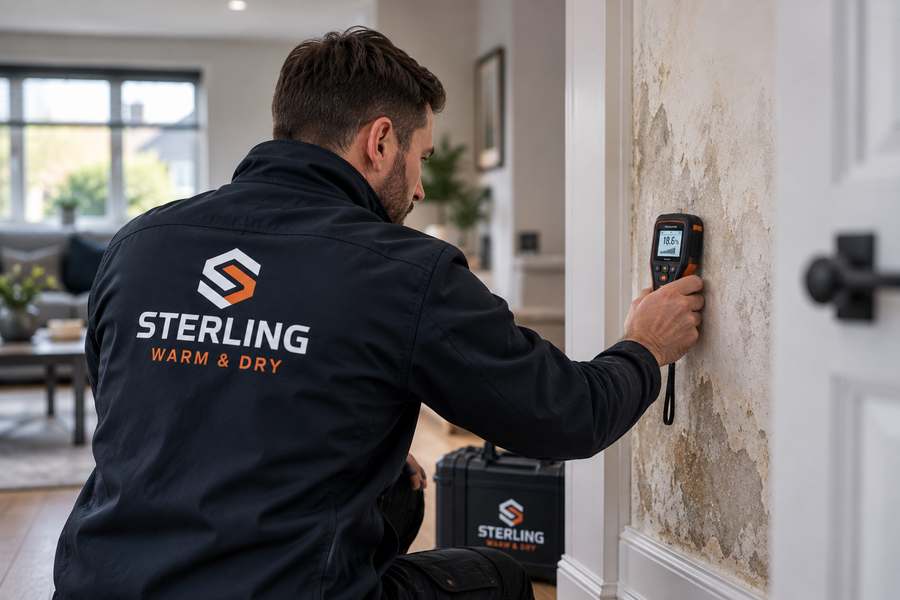
THE STERLING APPROACH
Start with the cause, then build the route to resolution.
A building can look dry while moisture remains within plaster, timber, masonry, screeds and floor build ups. Structural drying is the controlled process of reducing that residual moisture and verifying progress before finishes are replaced.
Dry the structure, not just the air
Dehumidification and air movement can change room conditions quickly, but the important question is what is happening inside the affected materials. Drying strategy therefore needs to relate equipment and environmental conditions to the actual wet building fabric.
Monitoring changes the decision
Repeat measurements create a drying record. They help show whether the strategy is working, whether conditions need adjusting and when the building is ready for the next stage. The target should be appropriate to the material and unaffected reference conditions rather than an arbitrary date.
Drying and reinstatement belong together
The reinstatement programme should respond to moisture evidence. This avoids closing assemblies too early and gives property managers, landlords and homeowners a clearer decision trail.
HOW THE JOB MOVES
A repeatable route from symptom to action.
Establish the water event and affected materials
The evidence from this stage informs the next decision.
Record baseline moisture and environmental conditions
The evidence from this stage informs the next decision.
Deploy an appropriate drying approach
The evidence from this stage informs the next decision.
Monitor progress and plan reinstatement
The evidence from this stage informs the next decision.
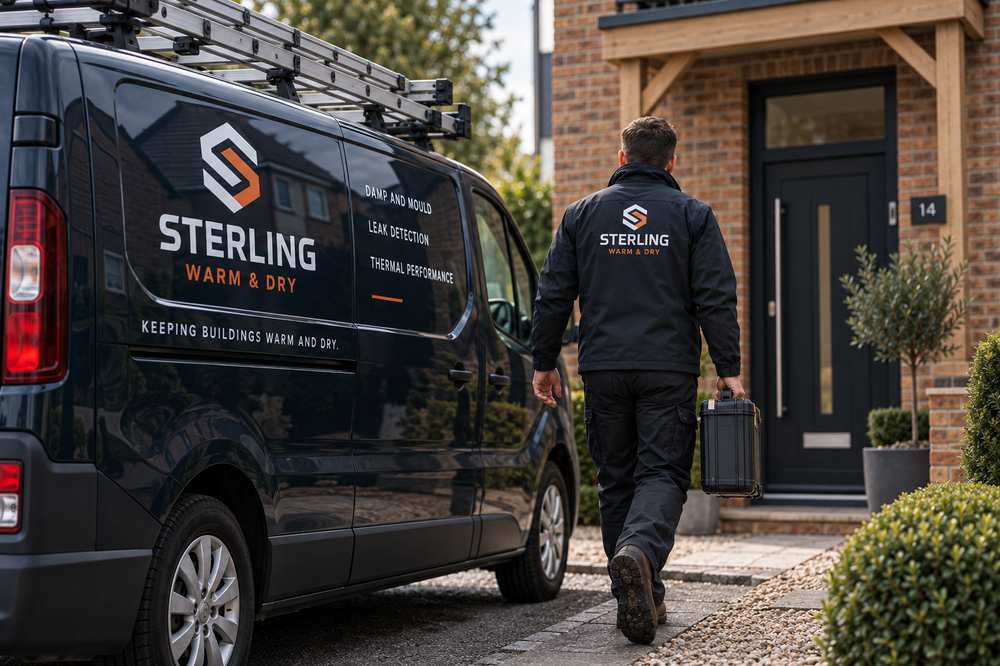
DOCUMENT THE DECISION
Make the evidence useful after the visit.
For involved or managed property instructions, the site record can connect photographs, observations and relevant measurements to a clear recommendation and next stage.
Professional reporting“We’d already paid someone to deal with mould once and it came back. Sterling spent more time working out why it was happening rather than just treating it again. So far it’s stayed away.”
Graham · HarrogateCOMMON QUESTIONS
Questions about this service
How long does structural drying take?
There is no reliable single duration. Material type, saturation, construction, temperature, humidity, access and the water event all influence drying time.
Do you always need to remove plaster or floors?
No. Removal should be justified by condition, contamination, damage, access or drying requirements rather than treated as automatic.
Why are repeat visits needed?
Monitoring shows whether moisture is reducing and whether the drying approach needs changing. It also provides evidence for the reinstatement decision.
Start with the building problem.
Tell Sterling what you can see, when it started and whether water is active now. We can establish the most appropriate investigation or response pathway.
Book / report an issueCall 07415 909211