
THE STERLING APPROACH
Start with the cause, then build the route to resolution.
The River Calder's flood warning area through Wakefield means river and surface water flooding is a genuine risk for some properties, particularly closer to the Calder corridor. For most instructions we take on across the district, though, the cause is a plumbing or appliance failure inside the building, not the river.
Wakefield's older terraced housing and its stock of converted mills and warehouses each need a different drying approach: dense solid-wall terraces hold moisture differently to a converted industrial building with exposed brick and steel. Sterling establishes which applies before setting out a drying programme.
The first priority is control
Active water should be made safe and the source controlled as quickly as practicable. The affected area can then be assessed to understand where water has travelled and which materials can remain, which need opening up and which may need removal.
Drying is a measured process
Drying is not simply leaving equipment in a room. The approach depends on the materials, water pathway, environmental conditions and access to wet fabric. Baseline readings and monitoring provide evidence of progress and help determine when reinstatement is appropriate.
Restore after the moisture problem is understood
Prematurely closing wet assemblies can trap moisture and create secondary problems. Reinstatement should follow the drying and condition evidence, with targeted repair and making good coordinated around the original incident.
COMMON CAUSES IN WAKEFIELD
The water damage causes we most often confirm in Wakefield
River and surface water flooding near the Calder
Properties within or close to the River Calder flood warning area carry a higher exposure to river and surface water flooding during sustained heavy rainfall.
Plumbing failures in ex-mining terraces
Older solid-wall terraced housing across the district commonly shows plumbing-related escapes behind plaster and under suspended timber floors.
Water ingress in converted mills and industrial buildings
Older roof coverings, rainwater goods and altered floor build-ups in converted commercial and industrial buildings are a recurring source of slow water ingress.
DOCUMENT THE DECISION
Make the evidence useful after the visit.
For involved or managed property instructions, the site record can connect photographs, observations and relevant measurements to a clear recommendation and next stage.
Professional reporting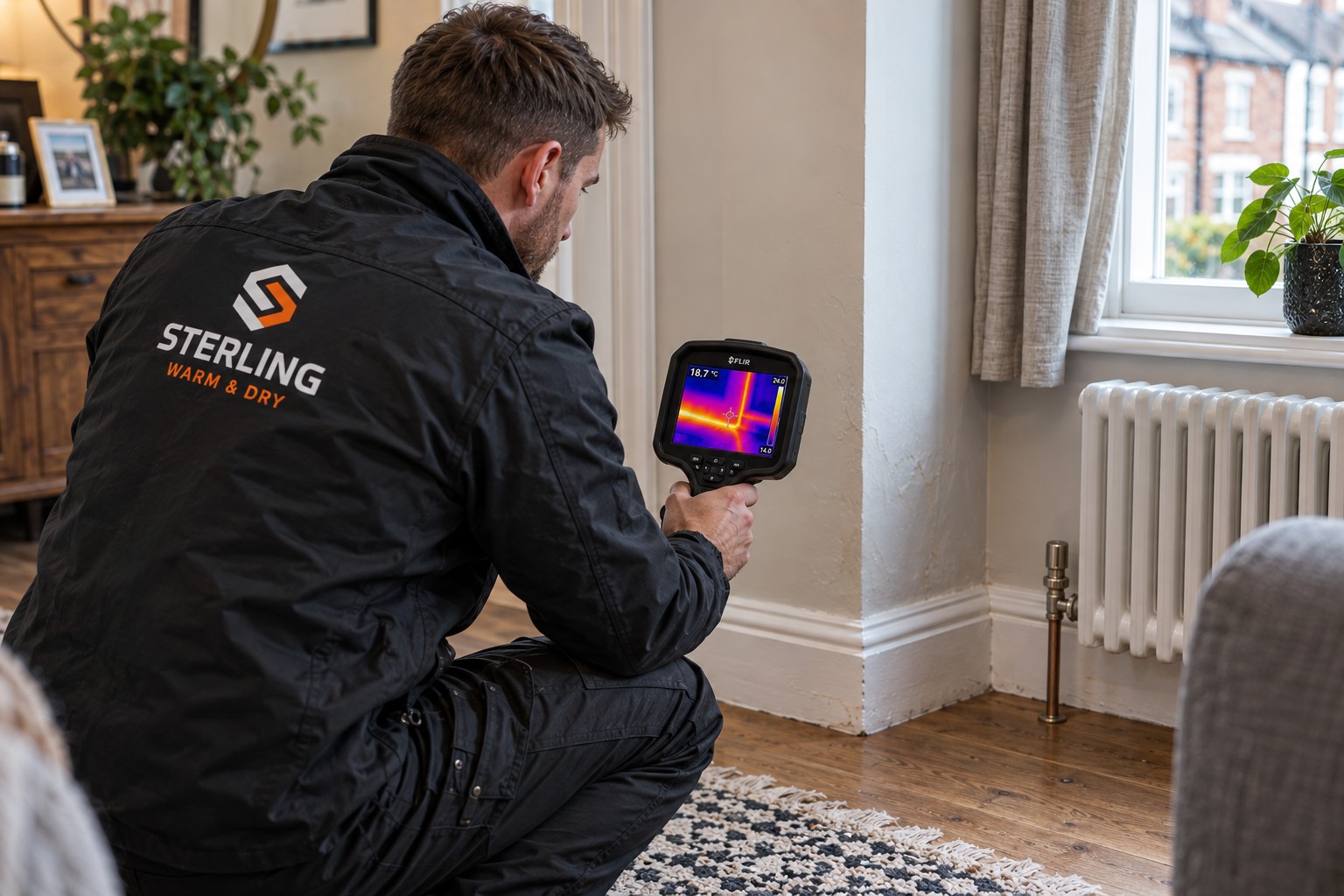
WAKEFIELD
Why the cause has to be confirmed, not assumed, in Wakefield
With a formally recognised flood warning area running through the city, it can be tempting to assume any dampness near the Calder is flood related. It often isn't. Sterling checks for plumbing, roof and drainage causes alongside river and surface water risk, so remedial work is specified against what actually happened, not the nearest obvious explanation.
Covering the city centre, Sandal, Horbury, Ossett, Stanley and the surrounding Five Towns area.
Book / report an issueCOMMON QUESTIONS
Questions about this service
Is my Wakefield property automatically at flood risk from the Calder?
Not automatically. Being within the general area does not mean every property is equally exposed; the Environment Agency's flood warning area gives a more precise picture, and a site investigation checks for other causes regardless.
Do converted mill and warehouse buildings need a different drying approach?
Often, yes. Exposed brick, steel and altered floor build-ups behave differently to a plastered terraced house, and the drying strategy is set accordingly.
How quickly can you attend a water incident in Wakefield?
Contact us with the postcode and what you can see, active water in particular, and we will confirm the next available response across Wakefield and the surrounding area.
“We assumed the damp in the back room was linked to the river because we're close to the Calder, but it turned out to be a guttering problem. Glad they checked before anyone talked about flood defences we didn't need.”
Homeowner, WakefieldStart with the building problem.
Tell Sterling what you can see, when it started and whether water is active now. We can establish the most appropriate investigation or response pathway.
Book / report an issueCall 07415 909211