
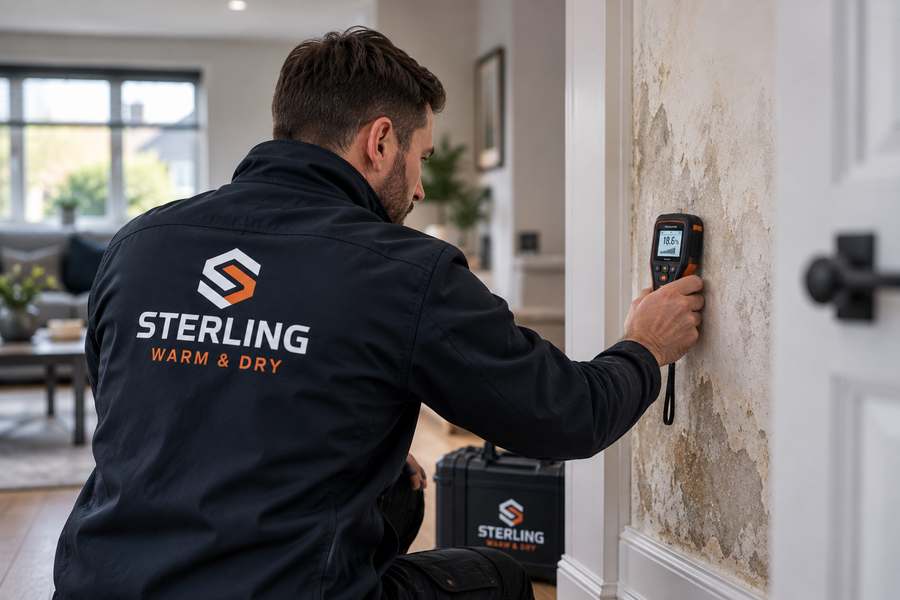
THE STERLING APPROACH
Start with the cause, then build the route to resolution.
Mould is evidence that conditions have supported growth; it does not by itself identify the moisture source. Cleaning may remove visible growth while leaving condensation, leakage, cold bridging or another moisture mechanism unchanged.
Look beyond the surface
The investigation considers where mould occurs, the shape and orientation of affected surfaces, heating and ventilation, internal humidity, cold surfaces, occupancy patterns and evidence of leaks or external water ingress.
Condensation is common, but not automatic
High indoor humidity meeting a cold surface is a frequent mechanism, particularly around external corners, window reveals and poorly performing fabric. But a leak or rainwater defect can produce similar local symptoms. The building evidence decides the pathway.
Remediation should follow cause control
Where visible mould needs cleaning or removal, that work should sit alongside measures that reduce the underlying moisture risk. Otherwise recurrence remains likely.
HOW THE JOB MOVES
A repeatable route from symptom to action.
Map where and when mould occurs
The evidence from this stage informs the next decision.
Assess moisture, ventilation and temperature context
The evidence from this stage informs the next decision.
Check for leaks and fabric defects where indicated
The evidence from this stage informs the next decision.
Define source control and remediation actions
The evidence from this stage informs the next decision.

DOCUMENT THE DECISION
Make the evidence useful after the visit.
For involved or managed property instructions, the site record can connect photographs, observations and relevant measurements to a clear recommendation and next stage.
Professional reportingCOMMON QUESTIONS
Questions about this service
Is black mould always condensation?
No. Colour does not establish the moisture source. Condensation is common, but leaks and water ingress can also create conditions for mould growth.
Can I just use mould spray?
Surface cleaning can remove visible growth, but it does not correct the moisture conditions that allowed growth to occur.
Do you assess ventilation?
Ventilation, heating, humidity and surface temperature are relevant where condensation is suspected, alongside checks for other moisture sources.
“A damp reading came up during the house purchase and made us nervous. We got Sterling to have another look before exchange. They explained what they thought was actually happening and what we needed to keep an eye on. Really helpful when you’re buying an older house.”
Sophie and Dan · YorkStart with the building problem.
Tell Sterling what you can see, when it started and whether water is active now. We can establish the most appropriate investigation or response pathway.
Book / report an issueCall 07415 909211