
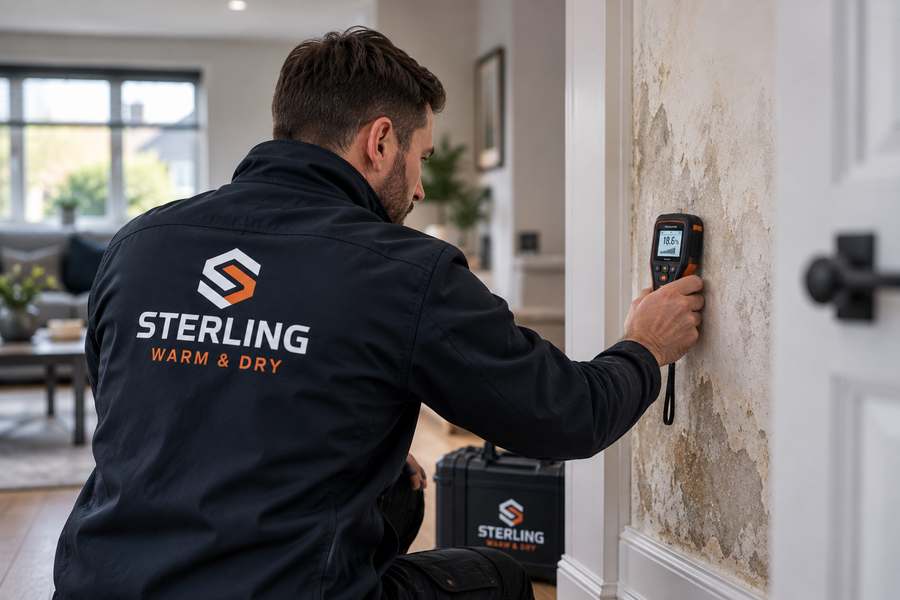
DIAGNOSIS BEFORE PRESCRIPTION
Start with what the building is telling us.
When water is actively entering a building, the first objective is to control immediate damage and make the situation manageable. The incident can then move into investigation, drying and repair.
What the investigation considers
We consider the history of the issue, location and pattern of symptoms, construction, internal and external condition, relevant moisture or temperature evidence and the routes by which water or heat could be moving through the building.
What happens next
The useful outcome is a decision: immediate action where needed, further investigation where evidence is incomplete, or a defined repair, drying or building fabric pathway. For managed property, that evidence can also support authorisation and the property record.

CONNECTED DELIVERY
Evidence should lead to action.
Where the problem crosses investigation, source repair, drying and making good, Sterling’s operating model is designed to keep those stages connected rather than leave the client managing unrelated hand offs.
COMMON QUESTIONS
Questions about this service
What is the first step?
Start with the symptoms and the building history. Sterling will use the available evidence to establish the most appropriate next step.
Do you provide a written record?
Where the instruction requires it, findings can be documented with relevant observations, photographs, measurements and recommended next actions.
Can you coordinate follow on work?
Where follow on work falls within the Sterling service pathway, the aim is to keep investigation, repair, drying and reinstatement connected.
Start with the building problem.
Tell Sterling what you can see, when it started and whether water is active now. We can establish the most appropriate investigation or response pathway.
Book / report an issueCall 07415 909211