
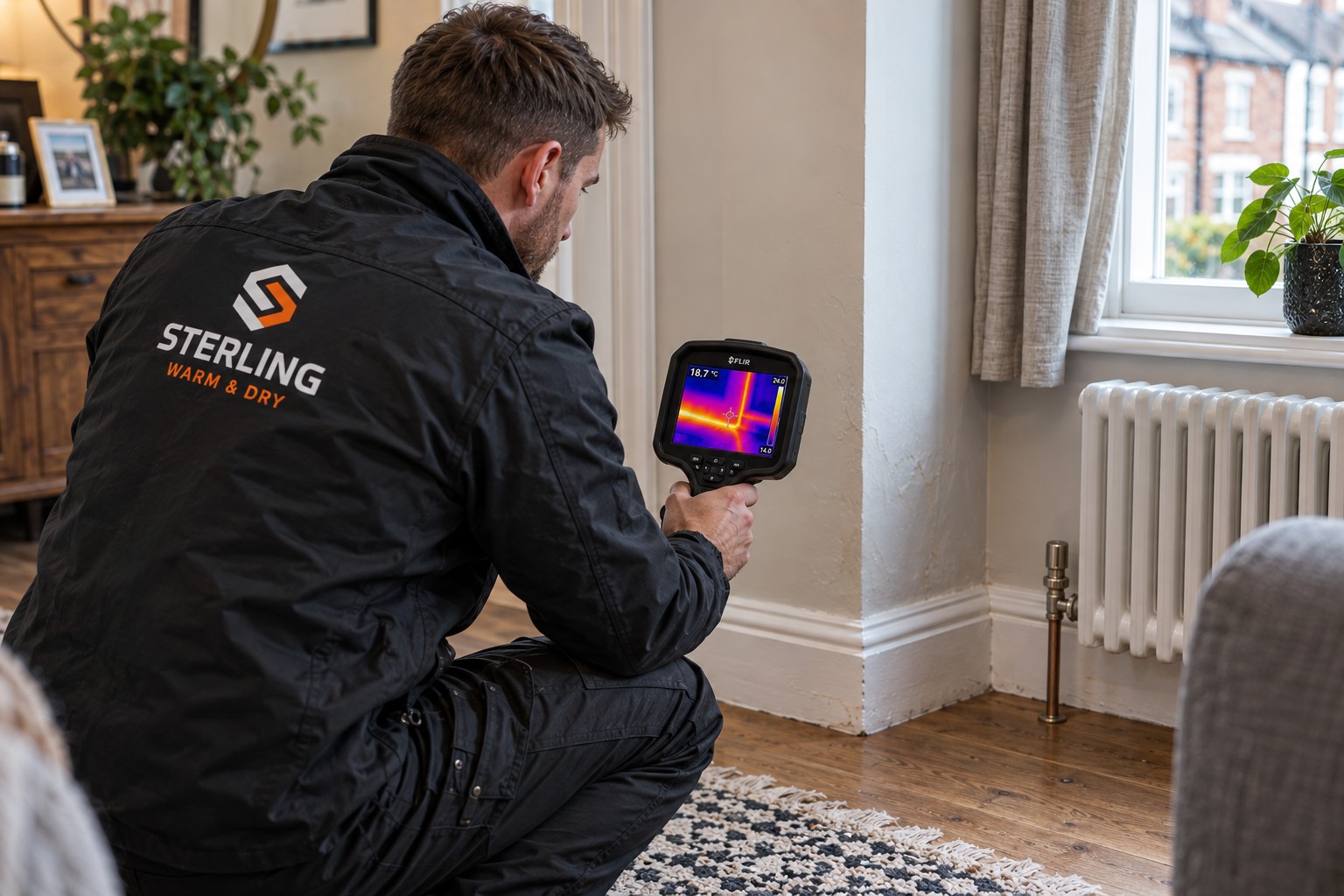
Similar looking symptoms can come from very different moisture mechanisms. Here is how the investigation differs.
The practical sequence
- Look at where the symptom occurs
- Consider seasonality and occupancy
- Check ventilation and surface temperature
- Look for external defects and plumbing routes
- Avoid diagnosing from appearance alone
Why evidence matters
Water and moisture move through buildings in ways that are not always obvious from the visible symptom. A good investigation tests plausible explanations against the building construction and the pattern of evidence. That is why Sterling avoids treating a single meter reading or thermal image as a complete diagnosis.
From information to action
The purpose of diagnosis is not to produce technical language for its own sake. It is to make the next decision clearer: control an active source, investigate further, dry affected materials, repair a building defect or reinstate once conditions are appropriate.
Need help with a live property? Use the guide to understand the process, then book an investigation if the cause or extent remains uncertain.